// where locals actually eat — updated September 2026
11 vetted neighbourhood spots in Mexico City, Mexico — Mexican Street Tacos, Mexican Taqueria, Mexican Tacos and Mexican Corn Cuisine and more, found through local word of mouth rather than a marketing budget. El Huequito currently leads the Mexico City list at 4.8 (Mexican Street Tacos). Most of the list stays in the everyday price range locals eat at week to week. 2 open early enough for breakfast. The 10 below earned the top pins for 2026.
El Huequito has been carving tacos al pastor from the spinning vertical spit since 1959, which makes it the oldest al pastor counter in Mexico City. The format has never needed updating: marinated pork shaved to order, small tortillas, a queue that moves fast because nobody is choosing between many things. Tacos come in around MXN 45, cheap enough to eat standing and order again, and the name, meaning roughly the little gap, still describes the scale of the original spot. This is the reference point that later taquerias in the city were measured against.
Price: Typical main course around MXN 45, ordered à la carte.
Los Cocuyos is a taqueria of the old Mexico City school: a hot counter, a few stools, and the cuts most kitchens no longer bother with. Suadero, longaniza and slow-cooked offal come off the griddle onto small handmade tortillas, assembled at speed by people who have made the same taco tens of thousands of times. Tacos are around MXN 35, the crowd runs to cooks finishing shifts and market workers starting them, and there is nothing to the experience beyond standing at the counter and ordering the next one.
Price: Typical main course around MXN 35, ordered à la carte.
On Bolivar in the historic centre, Taqueria Los Cocuyos runs the taco counter that Mexico City cooks treat as the benchmark for offal. Everything happens in a metre of griddle: suadero kept at a low simmer, tripe and longaniza worked to order, small handmade tortillas doubled under each portion. Tacos land at about MXN 35 and the trade builds through the evening, when kitchen staff and night workers come off shift. There is no seating and no ceremony, which is a large part of why it has kept its reputation for so long.
Price: Typical main course around MXN 35, ordered à la carte.
Expendio de Maiz builds everything from heritage Mexican corn, nixtamalised on site, ground daily and pressed to order behind a small counter on Alvaro Obregon in Roma Norte. There is no fixed menu. The kitchen decides what corn becomes that day and keeps sending plates until you stop it, which turns a meal into a sequence rather than a choice. Dishes land at around MXN 180, the room seats very few, and the appeal is narrow and deliberate: one native ingredient, treated as the whole subject rather than the base for something else.
Price: Typical main course around MXN 180, ordered à la carte.
Fonda Margarita has served the daily set meal from Adolfo Prieto in Benito Juarez since 1956, cooking in the fonda tradition of soup, rice and a stewed main that changes with the day rather than the season. The stews sit in clay and metal pots over a low flame and the queue outside is part of the arrangement. A full plate runs to about MXN 95, which is the point: this is everyday neighbourhood eating priced for people who do it several times a week, not a version of it staged for anyone else.
Price: Typical main course around MXN 95, ordered à la carte.
The tostada stalls inside the Coyoacan market assemble to order and nothing waits: a crisp fried corn base, a heap of topping, built in front of you at the counter. Chicken in smoked chilli, shrimp and potato are the standing options, piled higher than the base looks able to carry. Each comes in around MXN 45. The market itself does the rest of the work, a covered hall in one of Mexico City's oldest districts where the tostada counter is a fixture of the weekend morning rather than a stop on anyone's itinerary.
Price: Typical main course around MXN 45, ordered à la carte.
Mercado de Medellin is the covered market where Colonia Roma's Latin American communities do their shopping, and the food stalls follow the same map. Cuban, Colombian and Central American counters sit alongside Mexican ones, which makes this one of the few places in the city where the regional range is the whole point rather than a theme. Stall plates run to around MXN 60, vegetarian options are easy to find across the hall, and the market works best approached as a grazing route: produce aisles, a bowl of pozole, fresh fruit waters, then back out.
Inside Mexico City's Jamaica flower market, the comedor feeds the traders who arrive long before the flowers are arranged. It is a market kitchen in the plainest sense, working through broths, tamales and fresh fruit waters for people who need a proper meal in the middle of a working morning. Vegetarian options are on the menu, plates come in at around MXN 80, and the setting is the draw as much as the food: a working hall on Guillermo Prieto stacked with cut flowers, where eating happens between deliveries rather than around them.
Merotoro cooks the food of Baja California in Mexico City, a peninsula cuisine built on Pacific fish, desert-edge produce and the wines of the Valle de Guadalupe rather than on the central Mexican repertoire. The room is relaxed and the menu moves with what arrives from the coast, which gives it more in common with a coastal kitchen than with a capital-city restaurant. Main courses sit at around MXN 180. For anyone who only knows Mexican food through its central and southern traditions, this is the northern counter-argument.
Price: Typical main course around MXN 180, ordered à la carte.
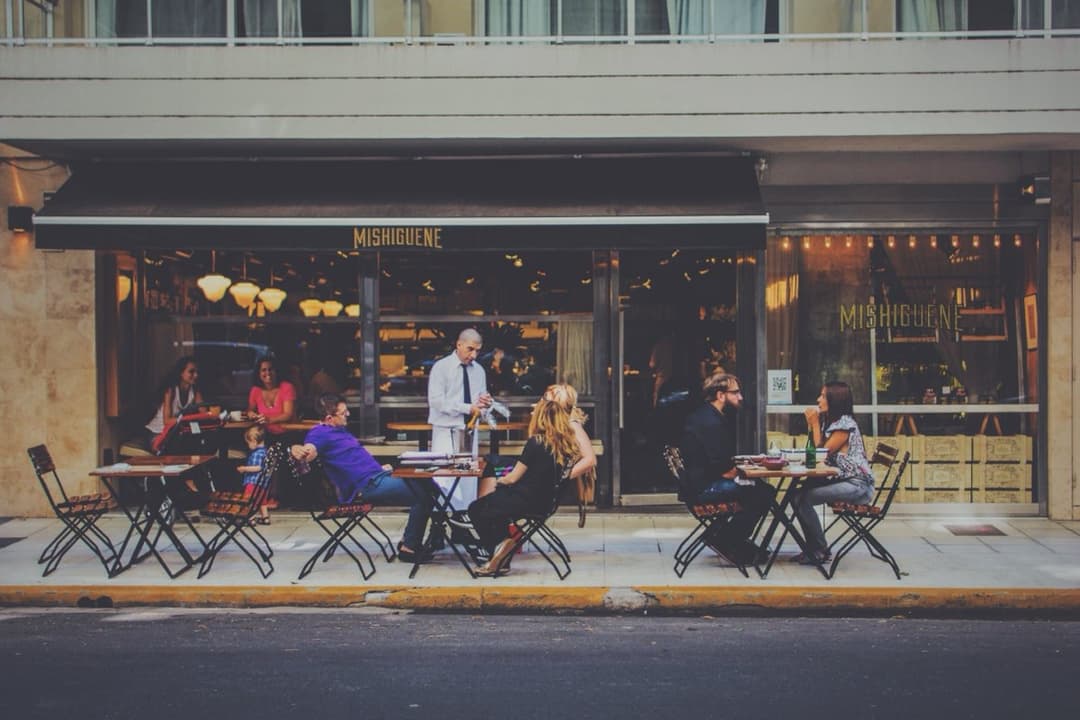
Cafe de Nadie keeps the old Mexico City cantina bargain intact: order a drink and the free botanas start arriving, one small plate after another, for as long as you stay. That arrangement shapes everything about the place. Afternoons stretch, the mezcal list matters more than the menu, and a full session costs very little, with plates priced around MXN 90 if you order beyond what the bar sends over. There is outdoor seating for warmer days, and the room fills with the kind of unhurried table that a cantina is built to hold.
Terrace: There is outdoor seating for warmer days.

 14.8
14.844.8